
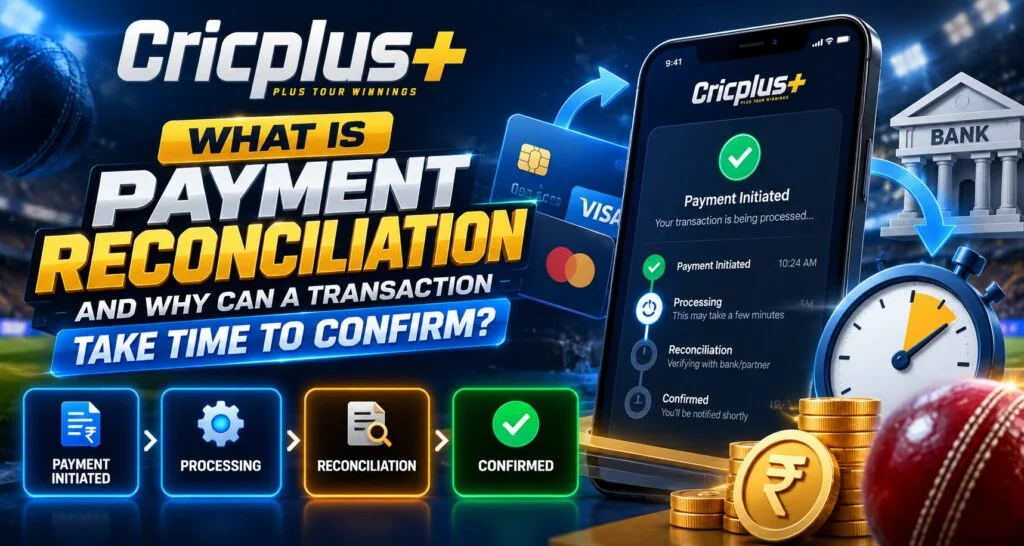
When you make an online payment, you naturally expect the transaction to be confirmed almost immediately. Sometimes, however, the payment may show as pending or take a little longer to update. This does not always mean something has gone wrong. In many cases, the payment simply needs to move through several stages before the final status is confirmed.
This is where payment reconciliation becomes important. Whether someone is checking a cricplus transaction, using crickplus, exploring cricket plus services, or following cricplus live activity, understanding what happens behind a payment can make the experience less confusing. A clear reconciliation process helps businesses match payment records and identify transactions that still need attention.
What Is Payment Reconciliation?
Payment reconciliation is the process of comparing payment records from different sources to make sure they agree.
For example, a business may have its own record showing that a customer made a payment. The payment processor or bank may have a separate record of that same transaction. Reconciliation checks these records against each other to confirm that the amount, transaction reference, timing, and status are consistent.
If something does not match, the difference can be investigated. This may involve a delayed payment, refund, processing fee, duplicate record, or another timing issue.
In simple terms, reconciliation helps answer one important question: did the payment recorded by the business actually match what happened through the payment system?
Why Can a Transaction Take Time to Confirm?
A payment does not always move directly from a customer’s device to a final confirmed status. It can pass through several systems before confirmation is complete.
The payment may first be authorized, then processed by a payment provider, and finally recorded by the receiving account. Banks and payment processors may also work with different processing schedules.
Technical checks can contribute to the delay as well. A system may need to verify the payment details, confirm that the transaction was received correctly, or wait for a response from another financial institution.
That is why a transaction marked as pending does not automatically mean the payment has failed. Sometimes the systems simply need additional time to complete their communication and update the final status.
How Reconciliation Improves Payment Accuracy
Accurate payment records are important for both businesses and customers. Without reconciliation, it can be difficult to determine whether a payment was successfully received or whether an amount is still waiting to be processed.
A good reconciliation process can help identify missing transactions, duplicate entries, incorrect amounts, refunds, and other discrepancies. It also gives businesses a clearer view of their financial records.
For customers, the benefit is less visible but equally important. Accurate records can make it easier to investigate questions about a payment and provide a clearer response when a transaction does not immediately appear as expected.
Quality and Ease of Use Matter
Payment systems should not only be accurate. They should also be easy to understand.
A customer should not have to guess what “pending,” “processing,” or “confirmed” means. Clear transaction statuses can reduce unnecessary worry and help people understand what is happening without repeatedly attempting the same payment.
We believe quality is reflected in these small details. A well-organized payment experience should make information easy to find, transaction updates easy to understand, and the overall process comfortable for the customer.
This is especially valuable when people are using a service from a mobile device and expect information to be available quickly.
Supporting a Better Customer Experience
A delayed transaction can be frustrating when the customer does not know why it is taking longer than expected.
Good payment handling helps address this by keeping transaction information organized and making status changes easier to track. If a payment requires additional time, customers should be able to understand that the transaction is still being processed rather than immediately assuming that their money has disappeared.
For businesses, reliable reconciliation also supports customer service. When records are accurate, support teams have better information when responding to payment-related questions.
This creates a smoother experience from the first payment attempt through to final confirmation.
Versatility Across Different Payment Situations
Payment reconciliation is useful in more situations than a simple successful purchase.
Businesses may need to reconcile completed payments, pending transactions, refunds, partial payments, cancellations, fees, and transactions that appear in one system before another. Different payment methods can also have different processing timelines.
That versatility makes reconciliation an important part of managing modern payment activity. It provides a structured way to review what happened instead of relying on a single transaction screen.
For users following cricplus live updates or managing an associated cricplus id, the same principle applies: a visible transaction status may not always represent the final financial outcome immediately.
Long-Term Value of Accurate Records
Payment reconciliation is not only about solving today’s pending transaction. It also contributes to better financial records over time.
Consistent reconciliation can help businesses spot recurring issues, understand transaction patterns, reduce manual errors, and maintain more reliable financial information. When records are organized, it becomes easier to review past transactions when a question arises.
This long-term value matters because payment activity can become difficult to manage as the number of transactions grows. A process that works well for a small number of payments may need more structure as customer activity increases.
Thoughtful Payment Management and Sustainability
There is also a practical sustainability benefit to getting payment processes right. Better records can reduce unnecessary duplicate work, repeated investigations, and avoidable administrative effort.
Instead of treating every delayed transaction as a separate problem, businesses can use reconciliation to understand where differences occur and improve the process over time.
Thoughtful payment management is ultimately about using resources carefully while giving customers a dependable experience.
Changing Customer Expectations
Customers today expect digital payments to be fast, clear, and convenient. At the same time, they understand that some transactions may require additional processing.
The challenge for businesses is finding the right balance between speed and accuracy. Confirming a transaction too quickly without proper checks can create problems later, while excessive delays can damage customer confidence.
We understand that customers want both convenience and reassurance. A good payment experience should provide clear information without making the process unnecessarily complicated.
Read More : Cricplus: What Is a Password-Recovery Cooldown and Why Can Too Many Requests Trigger One?
Conclusion
Payment reconciliation helps businesses compare records, identify differences, and maintain accurate transaction information. A payment can take time to confirm because several systems may need to communicate before the final status is available.
For customers, the most important thing is knowing that a pending transaction does not automatically mean a failed payment. Clear statuses, accurate records, and a reliable reconciliation process can make the experience easier to understand.
Whether you are using cricplus, crickplus, cricket plus, checking cricplus live activity, or managing a cricplus id, we believe a dependable payment experience should combine accuracy, comfort, transparency, and ease of use.
FAQs
1. What is payment reconciliation?
Payment reconciliation is the process of comparing payment records from different sources to confirm that transaction details such as amount, reference, and status match correctly.
2. Why is my payment taking time to confirm?
A transaction may take longer because the payment needs to pass through different systems, banks, or payment processors. Technical checks and processing schedules can also affect confirmation time.
3. Does a pending payment mean it has failed?
Not necessarily. A pending status usually means the transaction has not reached its final status yet. It may still be processing or waiting for confirmation from another system.
4. Why is payment reconciliation important for customers?
Accurate reconciliation helps businesses maintain reliable transaction records and makes it easier to investigate payment questions, missing transactions, refunds, or other discrepancies.
5. How can businesses improve payment reconciliation?
Businesses can improve reconciliation by keeping accurate transaction records, matching payment information regularly, monitoring exceptions, and clearly tracking pending, completed, refunded, and failed transactions.