
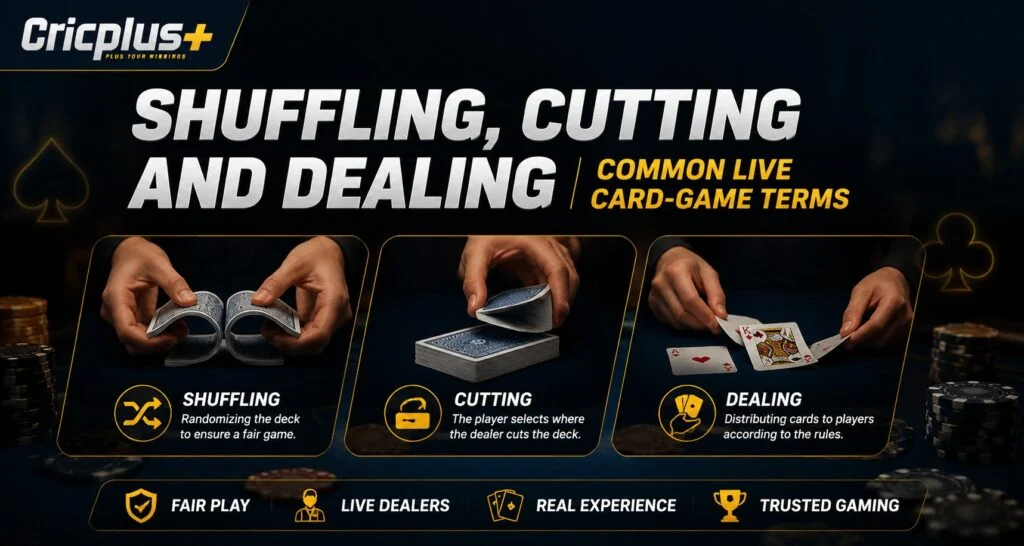
Live card games involve several traditional processes and terms that help maintain fairness, order, and transparency during gameplay. Concepts like shuffling, cutting, and dealing are basic parts of card-game operations, but many new players may not fully understand how these steps work. Cricplus helps users explore different entertainment formats by explaining important terms and processes that are commonly used in live card-game environments.
Understanding these basic actions makes it easier to follow how cards are prepared, distributed, and managed during a game. Whether watching a live table or learning card-game rules, knowing these terms creates a better understanding of the overall process.
What Is Shuffling in Card Games?
Shuffling is the process of mixing cards before a game begins. The main purpose of shuffling is to create a random order so that every round starts with a fresh card arrangement.
A proper shuffle helps maintain:
- Random card distribution
- Fair gameplay
- Unpredictable outcomes
- Equal opportunity for participants
In live card games, shuffling is an important step because it prevents patterns from developing and ensures that cards are not arranged in a predictable way.
Different Types of Card Shuffling Methods
There are several traditional methods used to shuffle cards. Each method is designed to mix the deck effectively.
Riffle Shuffle
The deck is divided into two sections, and the cards are combined by interweaving both halves. This is one of the most common professional shuffling techniques.
Overhand Shuffle
Cards are moved from one hand to another in small groups. This method is simple and commonly used in casual games.
Hindu Shuffle
A portion of cards is removed repeatedly from the top and transferred to the other hand. It is widely used in many card-game cultures.
Automated Shuffling
Many modern live card tables use automatic machines to shuffle cards. These systems help improve speed and consistency.
What Is Cutting the Deck?
Cutting is the process of dividing the shuffled deck into sections and changing their order before dealing begins.
Usually, another participant or an assigned person cuts the deck after shuffling. This additional step provides another layer of transparency before cards are distributed.
The purpose of cutting includes:
- Adding another random element
- Confirming that cards were properly shuffled
- Reducing the possibility of card-order patterns
Cutting is a simple but important part of traditional card-game procedures.
Understanding the Dealing Process
Dealing refers to distributing cards from the deck to participants according to the rules of a specific game.
The dealer is responsible for:
- Distributing cards correctly
- Following the game sequence
- Maintaining proper order
- Managing the table process
Different games have different dealing methods. Some games require one card at a time, while others may distribute multiple cards together.
Role of the Dealer in Live Card Games
The dealer plays an important role in maintaining smooth gameplay. A professional dealer ensures that each step follows the correct procedure.
Dealer responsibilities may include:
- Checking the deck before use
- Managing card distribution
- Announcing game actions
- Following table rules
- Maintaining a consistent pace
A skilled dealer helps create an organised and enjoyable table environment.
Why Understanding Card Terms Is Important
Learning basic card-game terminology helps users understand what happens during a live game. Instead of only watching the action, users can follow the complete process from preparation to completion.
Important terms to understand include:
- Shuffle
- Cut
- Deal
- Dealer button
- Community cards
- Hand ranking
- Betting rounds
Users exploring entertainment features after Cricplus Login can benefit from knowing these terms before joining any live card format.
How Technology Has Changed Live Card Games
Technology has introduced new features that improve transparency and accessibility in live card games. Modern platforms combine professional dealers, streaming technology, and digital interfaces to create interactive experiences.
Features available through the Cricplus App may help users access information, follow live sessions, and understand game-related details more easily.
Technology improvements include:
- High-quality video streaming
- Digital game interfaces
- Automated card handling systems
- Real-time updates
These developments have made live card formats more accessible to a wider audience.
Understanding Live Card Features Through Cricplus
Different card games may use different approaches for shuffling, cutting, and dealing. However, these steps remain essential for maintaining structure and fairness.
With features like Cricplus Live updates and Cricplus Pro options, users can learn more about digital entertainment formats and understand common terms used in live card environments.
Knowing these processes allows users to follow gameplay more confidently and understand why each step takes place.
Conclusion
Shuffling, cutting, and dealing are fundamental parts of live card games. Each process has a specific purpose, from creating random card orders to ensuring proper distribution during gameplay.
Understanding these common terms helps users follow live card formats more clearly and appreciate the procedures that Support organised gameplay. Whether learning for the first time or improving existing knowledge, these basics provide a strong foundation for understanding card-game operations.
FAQs
Why is shuffling important in card games?
Shuffling creates a random card order and helps maintain fairness by preventing predictable patterns.
What does cutting a deck mean?
Cutting a deck means dividing the shuffled cards into sections and changing their order before dealing.
Who is responsible for dealing cards in live games?
A dealer is responsible for distributing cards according to the rules and maintaining the correct game process.
Are automated shuffling machines used in live card games?
Yes, many modern live card environments use automated shuffling systems for consistency and efficiency.
Why should beginners learn card-game terms?
Understanding basic terms helps beginners follow gameplay and understand the actions happening during a live session.
How has technology improved live card games?
Technology has improved live card games through better streaming, digital interfaces, and automated processes.